I. THE LINE WAS REAL
Two stations. One track through the town.
Randalstown's first railway station opened on 11 April 1848. It stood near Shane's Street, close to the gates of Shane's Castle. The railway did not stay there.
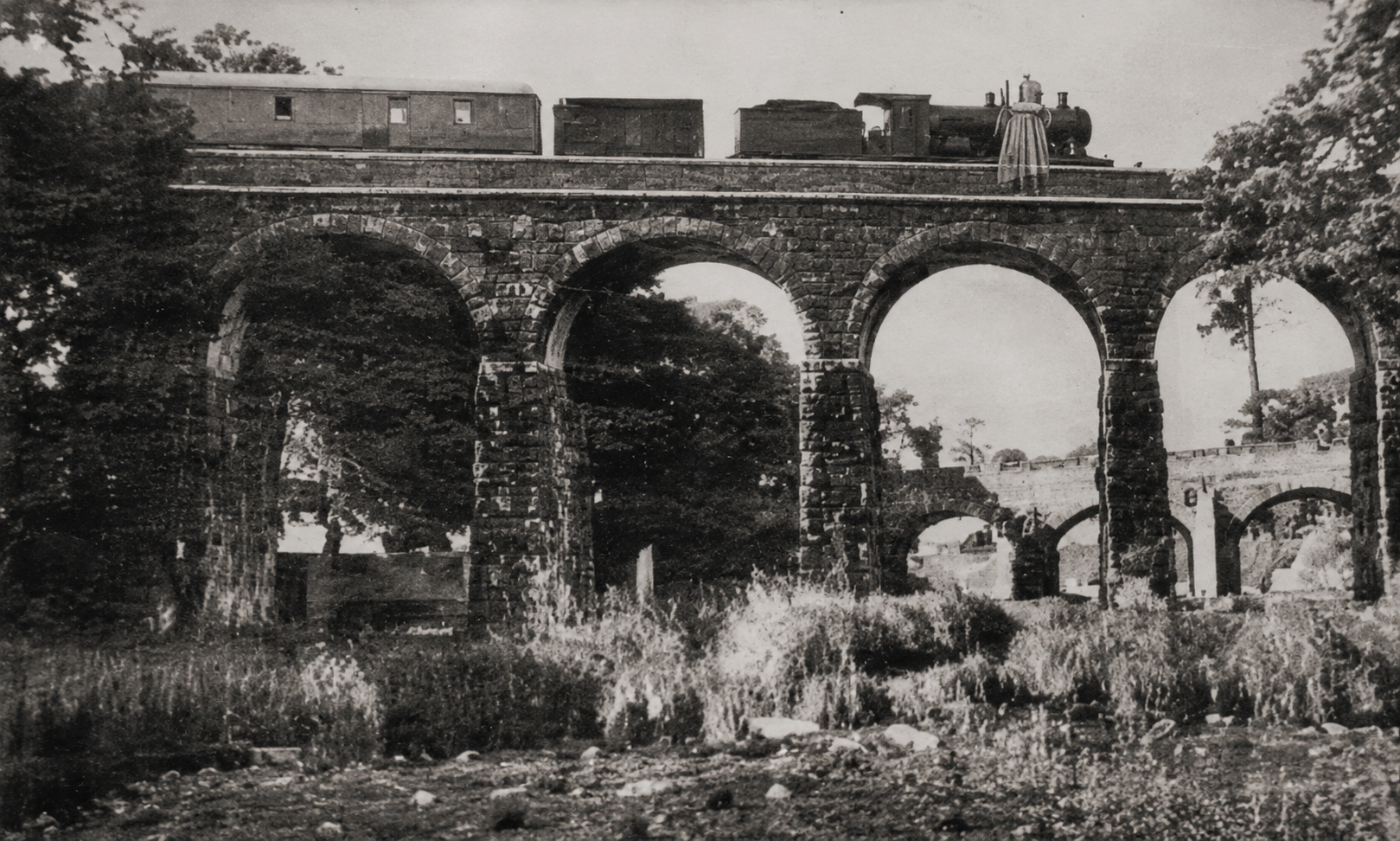
On 10 November 1856, the station was moved south to Station Road as the rails were driven onwards towards Cookstown. The new route crossed the River Maine over the great stone viaduct and cut a path through the land where roads, gardens and houses would later stand.
The viaduct and bridges remain, but the rails were eventually lifted. Fences, estates and homes now cover parts of the route.
But a railway line does not disappear simply because people build over it.
II. THE GIRL BEYOND THE TOWN
Everybody knew Mary Bell. Nobody knew her.
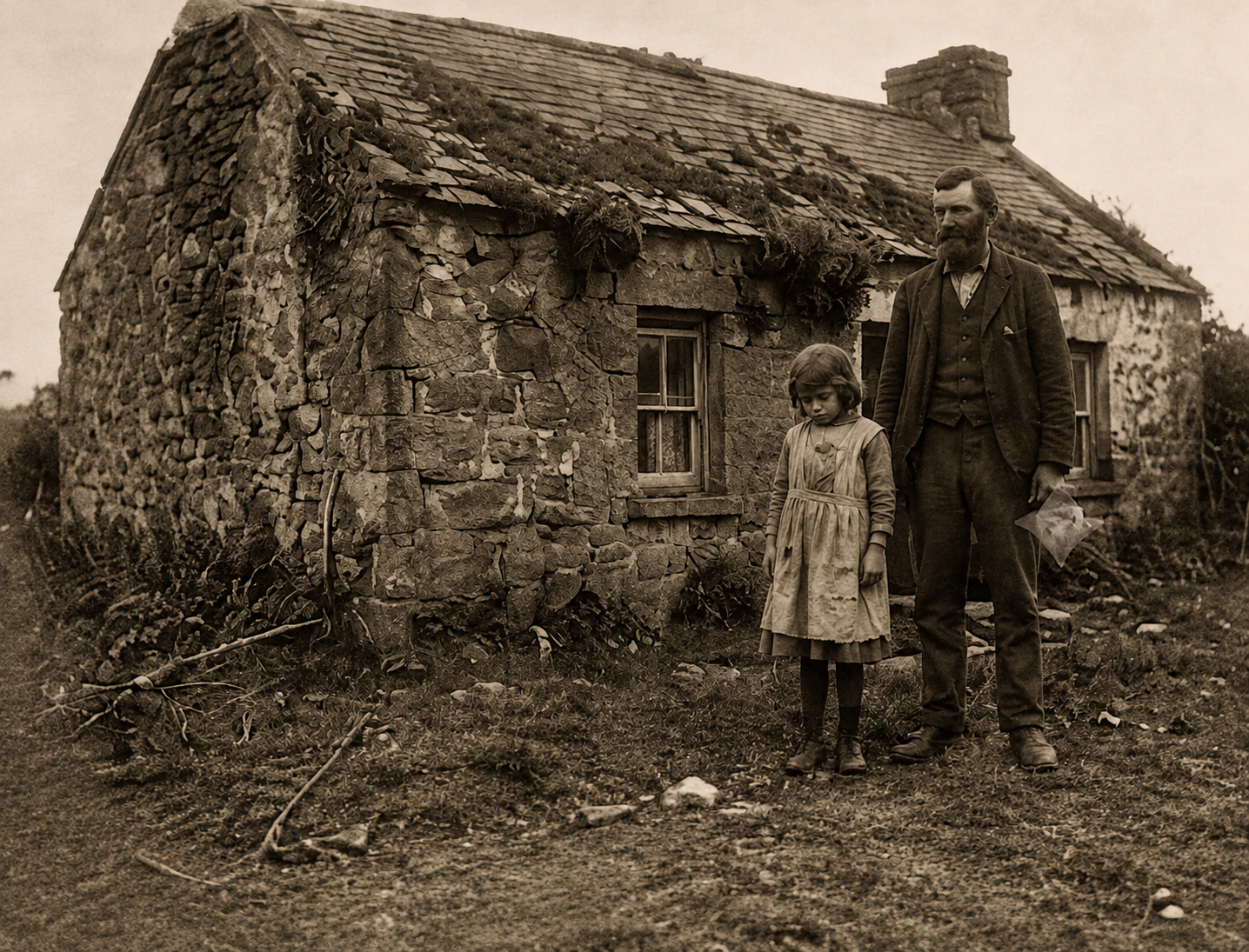
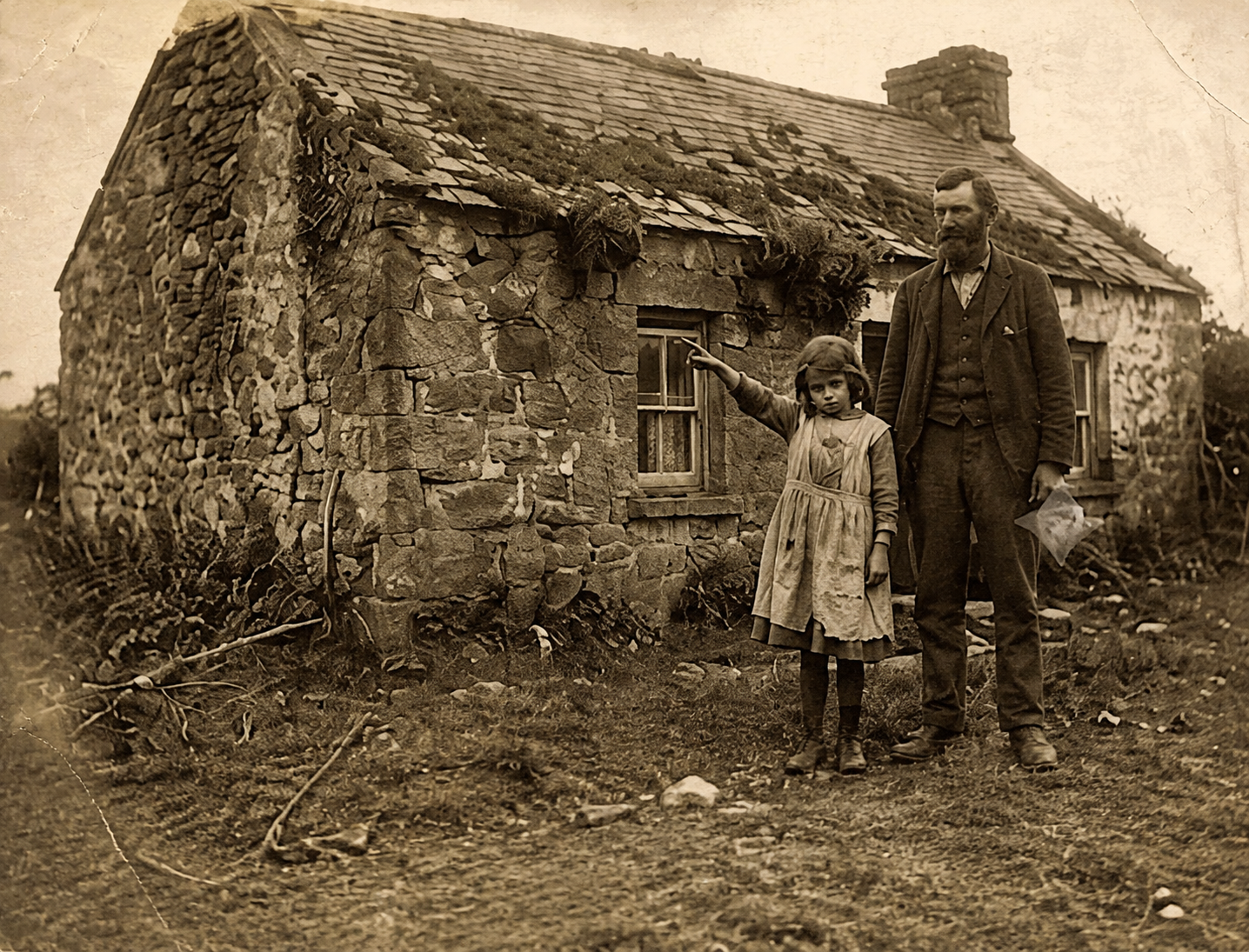
Mary was born around 1918 into one of Randalstown's poorest and most excluded families. Their small cottage stood beyond the last close row of houses, where the town gave way to rough ground and the railway.
Old Bleach was the great employer. To belong to the life of the mill was to belong to Randalstown. Mary's father took whatever labour he could find, but the Bells remained outside that world.
Mary never knew her mother. The woman had disappeared before Mary was old enough to remember her. There were no witch trials recorded in Randalstown, but there had been accusations. Older people whispered that Mary's mother possessed knowledge a respectable woman should not have. Some said she fled. Others said she had been made to disappear.
An accusation did not require a court to destroy a family.
Her father raised Mary alone. He would not speak about his missing wife and taught his daughter to expect little kindness from the town. When he died during the winter of 1940, Mary remained in the cottage by herself.
She spoke little, avoided crowded streets and entered the town only when she had to. Children followed her for sport. Adults lowered their voices as she passed. They called the silent Bell girl strange, though Mary harmed nobody and wanted only to be left in peace.
III. HER ONLY FRIEND
Every night, the train answered her.
Mary loved the railway. She loved the tremor in the earth before an engine appeared, the glow from the firebox and the enormous rush of noise through the dark. It was the one thing in her life that always returned.
From the time she was a small child, Mary waited beside the same stretch of track on the outskirts of Randalstown. The regular driver came to recognise her. As the engine approached the bend, he sounded two short notes on the whistle. Mary raised her little lamp. The fireman sometimes raised his own in reply.
Night after night, year after year, the ritual remained unchanged. The town might ignore Mary Bell, but the train announced itself to her. It told her she had been seen.
Two notes from the whistle. One light raised beside the line. For nearly twenty years, neither failed the other.
IV. THE NIGHT THE LINE FELL SILENT
Monday, 2 November 1942.
The regular driver was ill. His replacement knew the route, but he did not know Mary.
Wartime blackout restrictions had swallowed the countryside. The locomotive's light was hooded and there was no station or crossing at Mary's lonely stretch of line east of the town, before the ground now occupied by The Meadows. The replacement driver saw no reason to sound the whistle there. He drove on through the darkness at speed.
Mary waited for the two familiar notes. They did not come. She searched for the light that had greeted her since childhood. There was nothing.
Those who later claimed to have witnessed it said Mary became distressed. The dependable thing had broken its promise. She moved closer, holding up her lamp. Then she stepped between the rails, listening, crying and trying to understand why her only friend would no longer answer.
The train reached her without warning.
There was one scream. Then the engine passed. What the searchers found beside the line was not whole.
THE BALLYMENA OBSERVER
FRIDAY, 6 NOVEMBER 1942
FATAL RAILWAY ACCIDENT AT RANDALSTOWN
A young Randalstown woman lost her life in a distressing accident on the railway late on Monday night.
The deceased, named locally as Mary Bell, was struck by the late train on the section beyond Randalstown station.
The driver stated that, under blackout conditions, he had not seen anybody upon the permanent way. A small hand-lamp was recovered beside the rails.
Railway employees searched the line until daybreak. At the inquest, the injuries were described only as being of a shocking character. A verdict of accidental death was returned.
Written beneath the clipping in red ink: “THEY SEARCHED UNTIL DAYBREAK. THEY NEVER FOUND HER HEAD.”
V. WHAT RANDALSTOWN HEARD
The town had known where Mary waited.
Most of Randalstown knew of Mary's nightly ritual, but nobody had warned the railway. Mary Bell had never been their concern while she was alive.
After her death, she made herself their concern.
The first stories came from men working the late trains. They spoke of a young woman standing beyond the reach of the lamps, holding a candle. When the locomotive drew near, she vanished. Then came the sound.
Not a whistle. Not brakes. A long, rising cry, followed by the grinding of teeth somewhere beneath the carriage floor.
Signal lamps changed to red on clear track. Brakes locked without warning. Passengers saw a headless woman running beside their carriage, even when the train was travelling at full speed. Some crews refused the last service through Randalstown.
Only after the stories began did older residents admit what the town had done: the accusations against Mary's mother, the cruelty shown to a lonely child and the certainty that she would be waiting beside the line that night.
The public were told the service was no longer required. Railway workers said the line had become impossible to work after dark.
Goods trains continued until 1959, mostly in daylight. By then, the railway no longer belonged to the company. It belonged to Mary.
RECOVERED RAILWAY WORKER'S DIARY // 1943
“That only leaves two of us.”
Patrick has refused the night line again. Says he saw the Bell girl beyond the signal cabin, her lamp held up though there was no train due. Called him a fool until the bell sounded three times by itself.
Patrick handed in his lamp this morning. Would not enter the shed to collect his pay. Johnston and myself are the only two left prepared to take a train through after dark.
Heard someone walking along the roof of the rear van from the viaduct to Station Road. Johnston checked at the platform. Nothing there except wet footprints ending above the guard's compartment.
That only leaves two of us. Cannot see us able to run this track much longer.
The remaining pages were cut out.
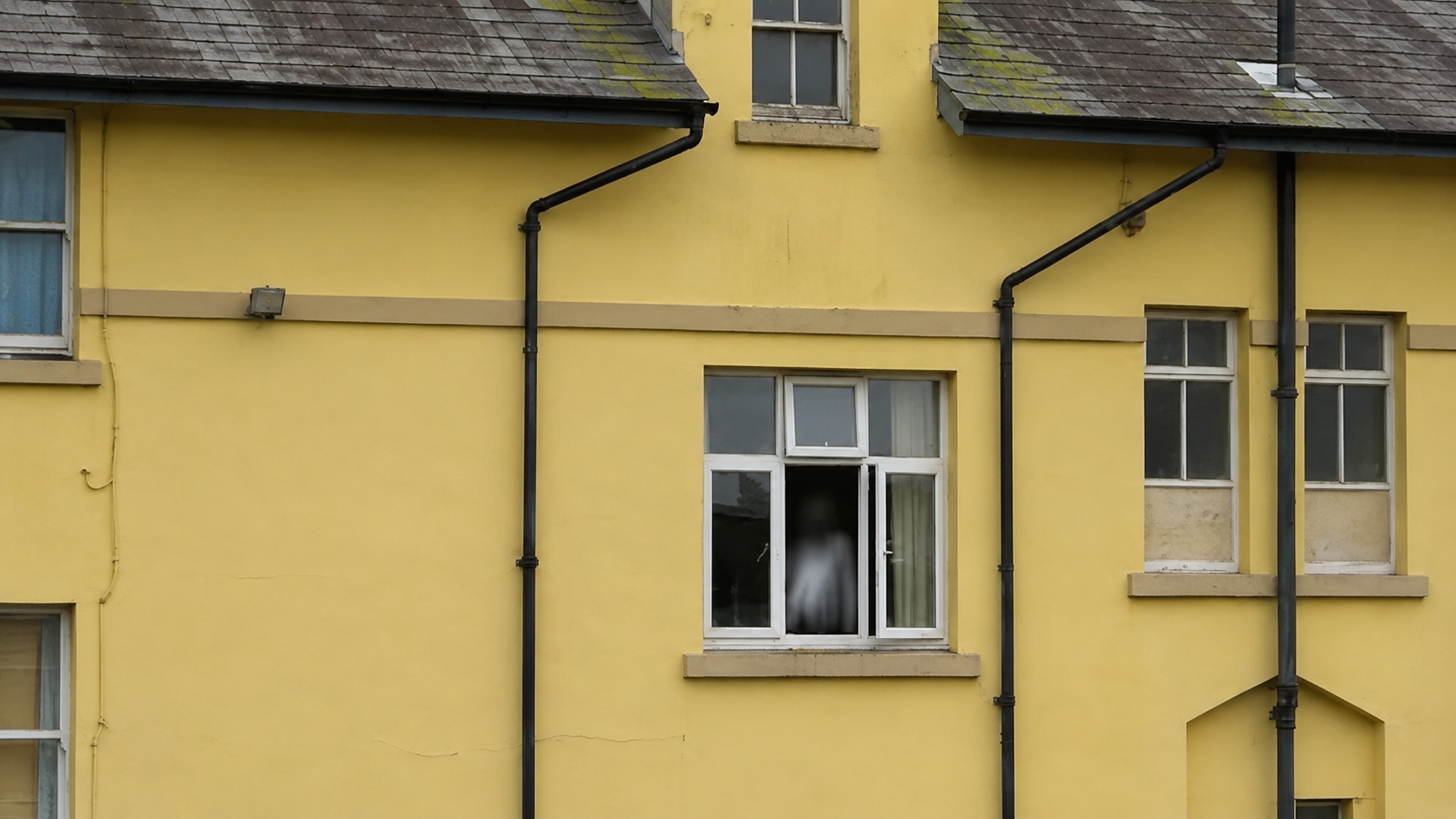
PHOTOGRAPHS SENT TO THIS ARCHIVE
Three images that were never explained.
None of the original negatives has been made available. The marks described below were reportedly noticed only after the photographs were developed.

IF YOU RECOGNISE THE WOMAN, RECORD WHERE YOU SAW HER BELOW.
VI. THE TRACK BENEATH THE HOUSES
She does not haunt one building.
Mary follows the railway.
Approaching from the east, the old line crossed the ground now occupied by The Meadows, Ashdale and Beechmount Park before reaching the station beside Station Road. From there it crossed the viaduct to the western side of the town and continued towards New Street. Beyond the obvious walkway, its route survives in embankments, boundary lines, narrow strips of ground and the unnatural angle of back gardens.
People living nearest the old alignment report the most:
- three slow knocks moving along an outside wall;
- the smell of wet soot in a room with no fire;
- a railway bell heard between 12:00 and 1:00 in the morning;
- dogs staring towards the rear fence and refusing to move;
- a woman wailing from the direction of the vanished track.
The closer the house is to the line, the closer she appears.
VII. IF SHE HAS FOUND YOU
Do not let her know you can hear her.
- Do not look towards the old line when the crying begins.
- Do not open a back door, even if the knocking sounds human.
- If a candle flame turns blue, extinguish it without speaking.
- Never answer a railway bell after midnight.
- If the crying stops directly outside, hide every mirror in the house.
Whatever happens, do not ask Mary Bell what she is looking for.