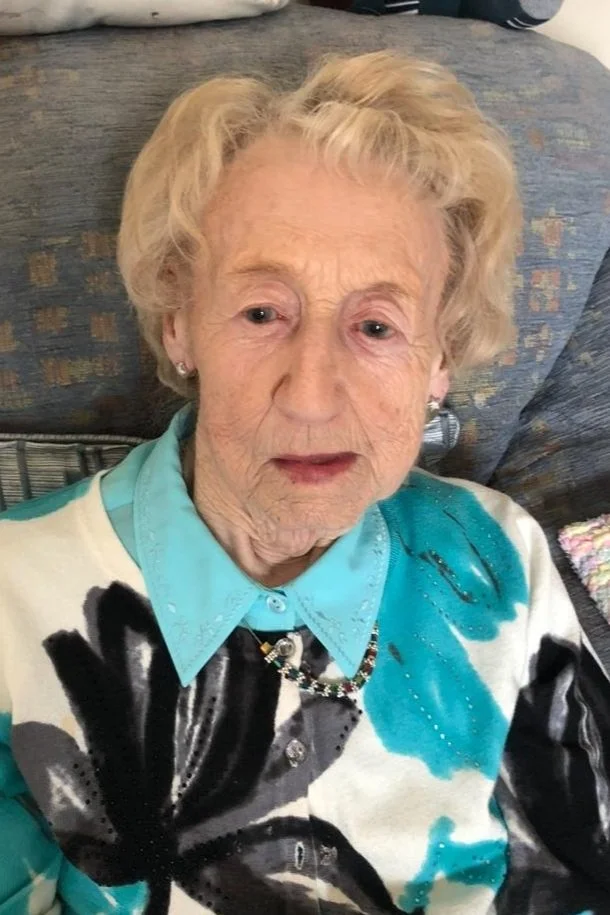
The history of the Old Bleach, the people who worked there, and Kathleen Letters in its final years.
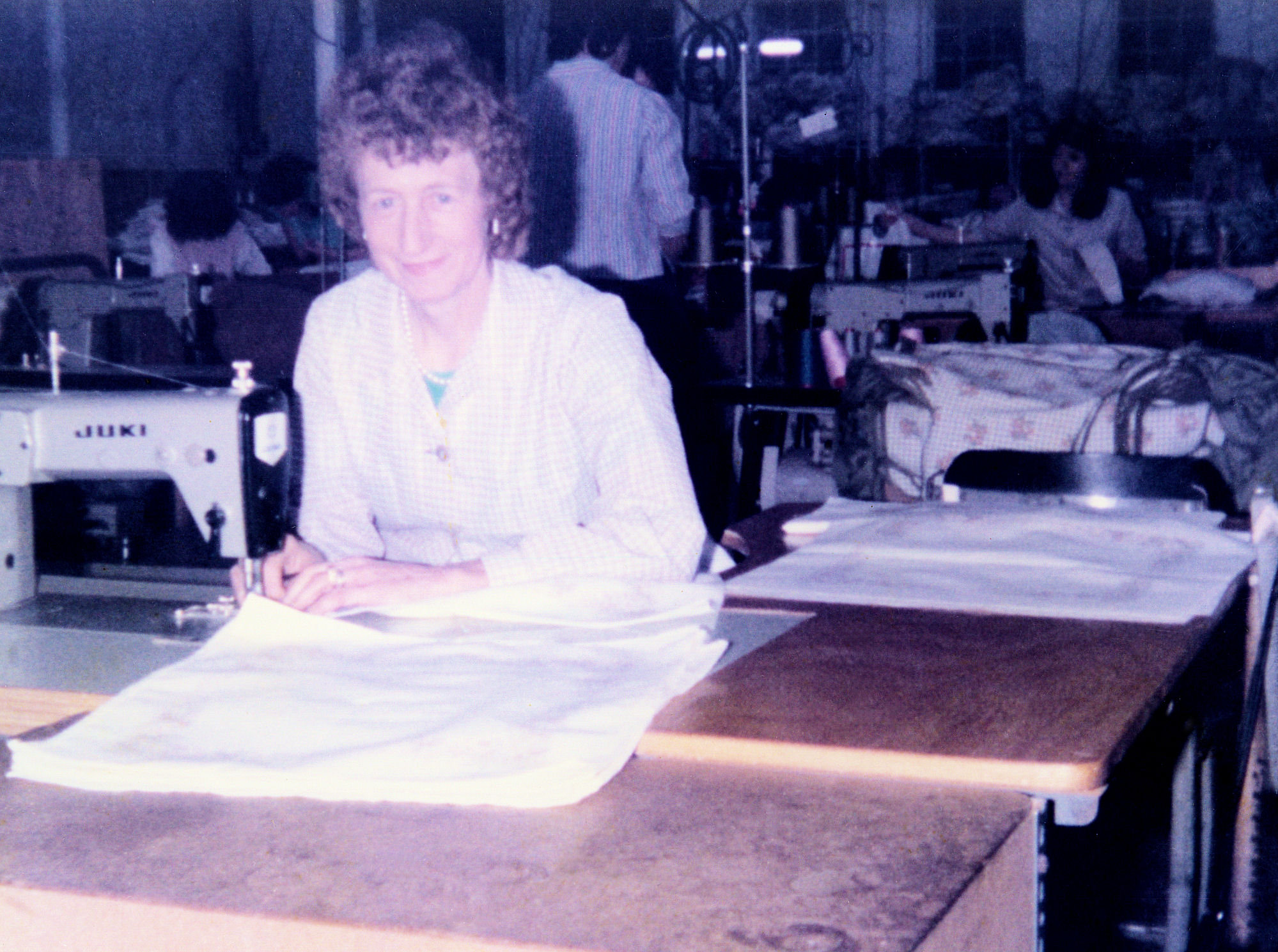
My granny, Kathleen Letters, worked at the Old Bleach in Randalstown. Here she is at her sewing machine in 1982, with a smile that will be familiar to everyone who knew her.
These photographs show one part of her life: the work she did, the people she worked alongside and the laughs they shared.
I started this page to remember her time there. I’d love it to become a place where other families can share their photographs and memories too, and help tell the story of the people behind the Old Bleach.
Open photographKathleen at her Juki machineStitching Room, 1982Photograph reproduced with permission from Down Memory Lane and Len Kinley
The factory through time
How the Old Bleach grew and declined
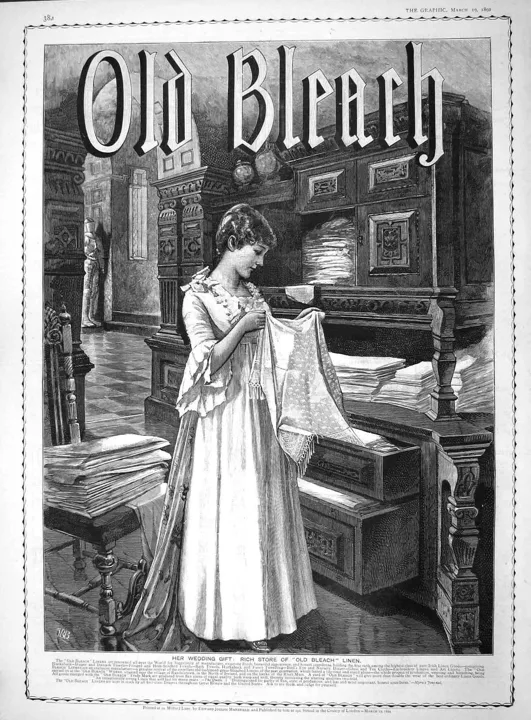
The Old Bleach grew from a local works into Randalstown’s largest employer. Its linen reached royal rooms, ocean liners and aircraft, but every finished piece began with the skill and routine of people at the works.
Charles James Webb establishes the company
The Quaker businessman founded the Old Bleach Linen Company at Randalstown. The works developed a reputation for fine household and dress linen.
A major industrial presence
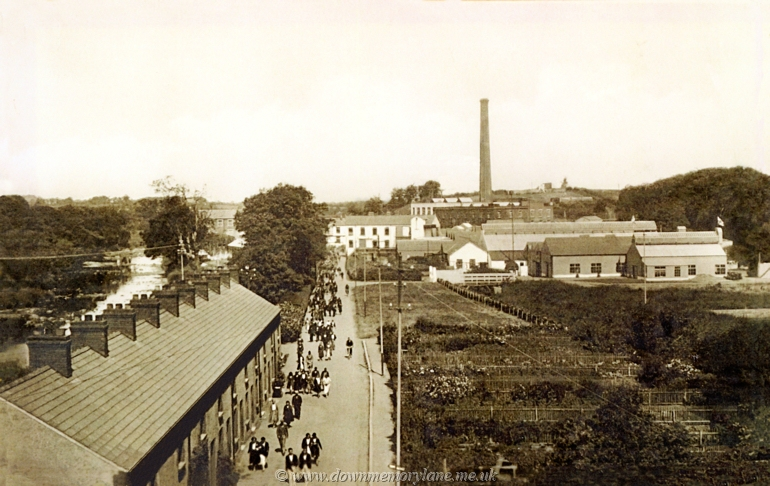
Period photographs show a substantial factory complex beside the River Maine. Generations of local families would pass through its gates.
Linen fit for a queen
Old Bleach supplied the linen for Queen Mary’s Dolls’ House, including a damask dining cloth and the miniature contents of its Linen Room.
Design, damask and international customers
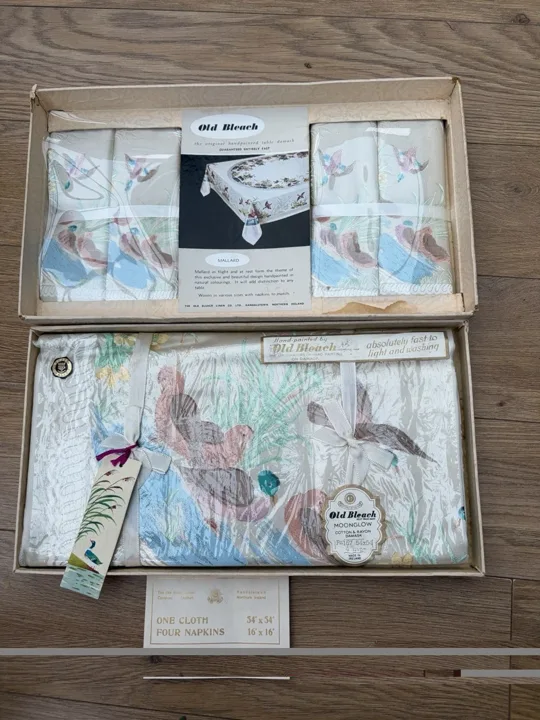
The company became known for hand-painted damasks and furnishing fabrics. Its cloth was supplied to shipping lines, airlines and customers far beyond Northern Ireland.
Weaving comes to an end
The weaving operation closed, existing orders were honoured, and production was gradually wound down.
The Stitching Room continues
The Stitching Room continued into the early 1980s while the company completed its remaining orders.
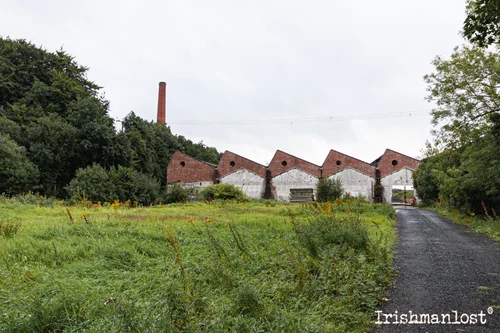
Open photographWorkers leaving the Old Bleach, July 1931 · Down Memory LaneEnlarge photographThe chimney, a surviving landmark, 2008
Inside the works
What work was like inside the Old Bleach
The Old Bleach was the largest single employer in Randalstown. At its peak, the company employed 1,000 people. Its hours, wages, friendships and family connections ran through the town. Source: National Lottery Heritage Fund
Much of the surviving detail about daily work comes from Samuel “Sammy” Ramsay. He started at the Old Bleach aged 14, collecting empty bobbins from automatic looms. His aunt Hannah later taught him to weave, and he went on to work as a weaver himself.
Ramsay recorded his memories for the Living Linen oral-history project in February 2000. National Museums NI preserves the recording and transcript. His testimony is the source for the details below about looms, working hours, carpets and pay. Samuel Ramsay’s interview record
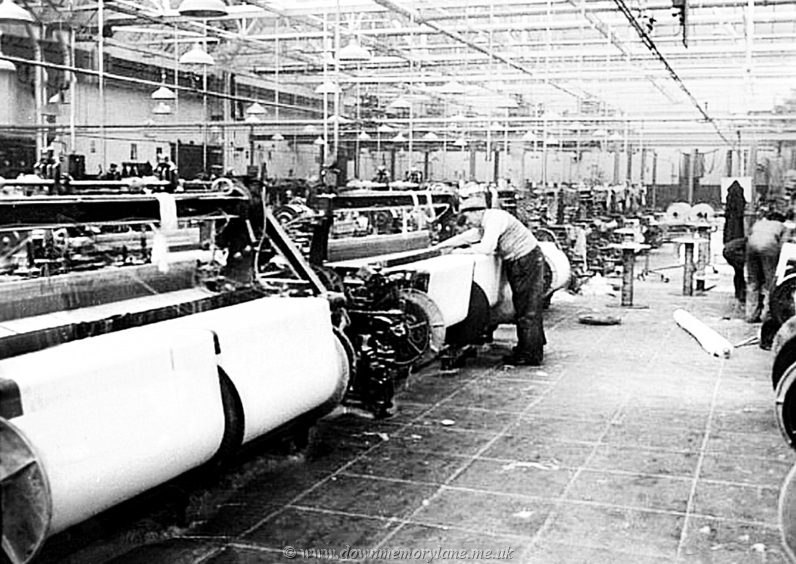
He remembered men and women weaving side by side, although the heavier sheeting looms were generally operated by men. The first horn sounded at 7.45, another followed at 7.55, and work began at 8 sharp. Tea came at 10, lunch ran from 1 until 1.30 and, when he first joined, work ended at 6.
07:45First horn
07:55Second horn
08:00Work begins
10:00Tea break
13:00Lunch
18:00Historic finish
Open photographThe weaving department, 1938Rows of looms weaving linen sheeting. Photograph: Down Memory Lane.
More than linen
Carpets and heavy cloth
In his interview, Samuel Ramsay explained that Old Bleach also wove jute for sacking and carpets on special looms. He identified the old carpet-factory site as the location later occupied by Dorma Old Bleach. The record does not establish where that sat within the earlier factory complex.
A Down Memory Lane account records Old Bleach parcels stacked at Randalstown Post Office and linen being carried from the mill to the railway station by electric lorry. That is not as modern as it sounds: British businesses were using battery-electric delivery vehicles by 1919. The date and model of the Old Bleach vehicle are not recorded in the account.
The surviving 1935 sales bill also states that qualifying parcels could be sent carriage-paid by post or rail.
Samuel Ramsay said weavers were paid according to output, based on the amount of cloth woven. He also received a little extra for locking up and checking the machinery at night. The interview does not provide the rates paid, so this page does not turn those memories into an unsupported wage figure.
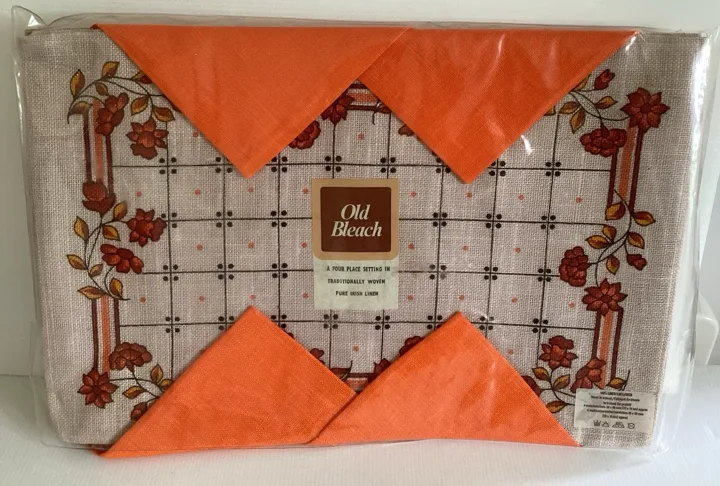
Fine table linen was only part of the story. Old Bleach produced household, dress and furnishing linen, combining industrial production with specialist weaving, design and hand-finished detail.
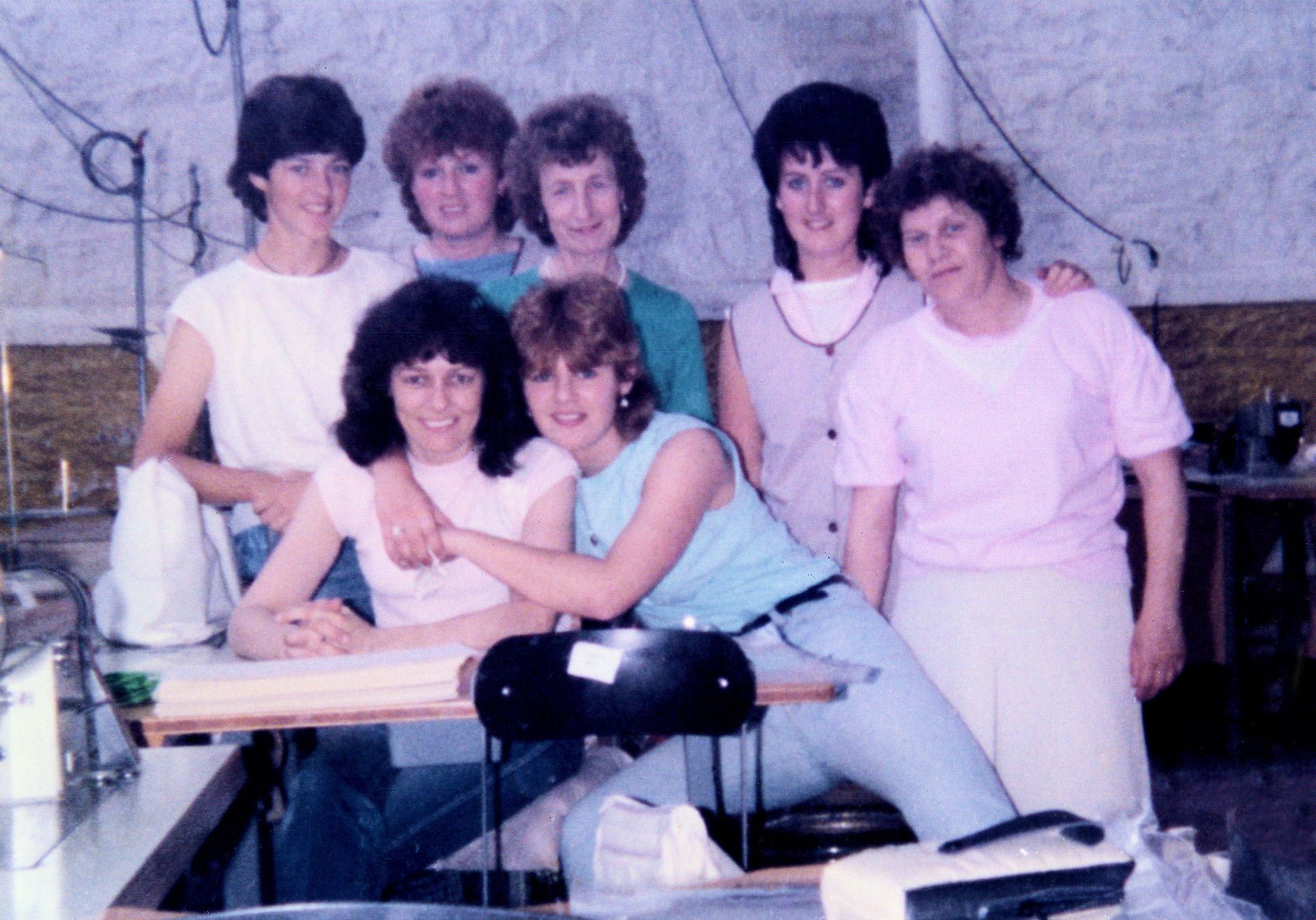
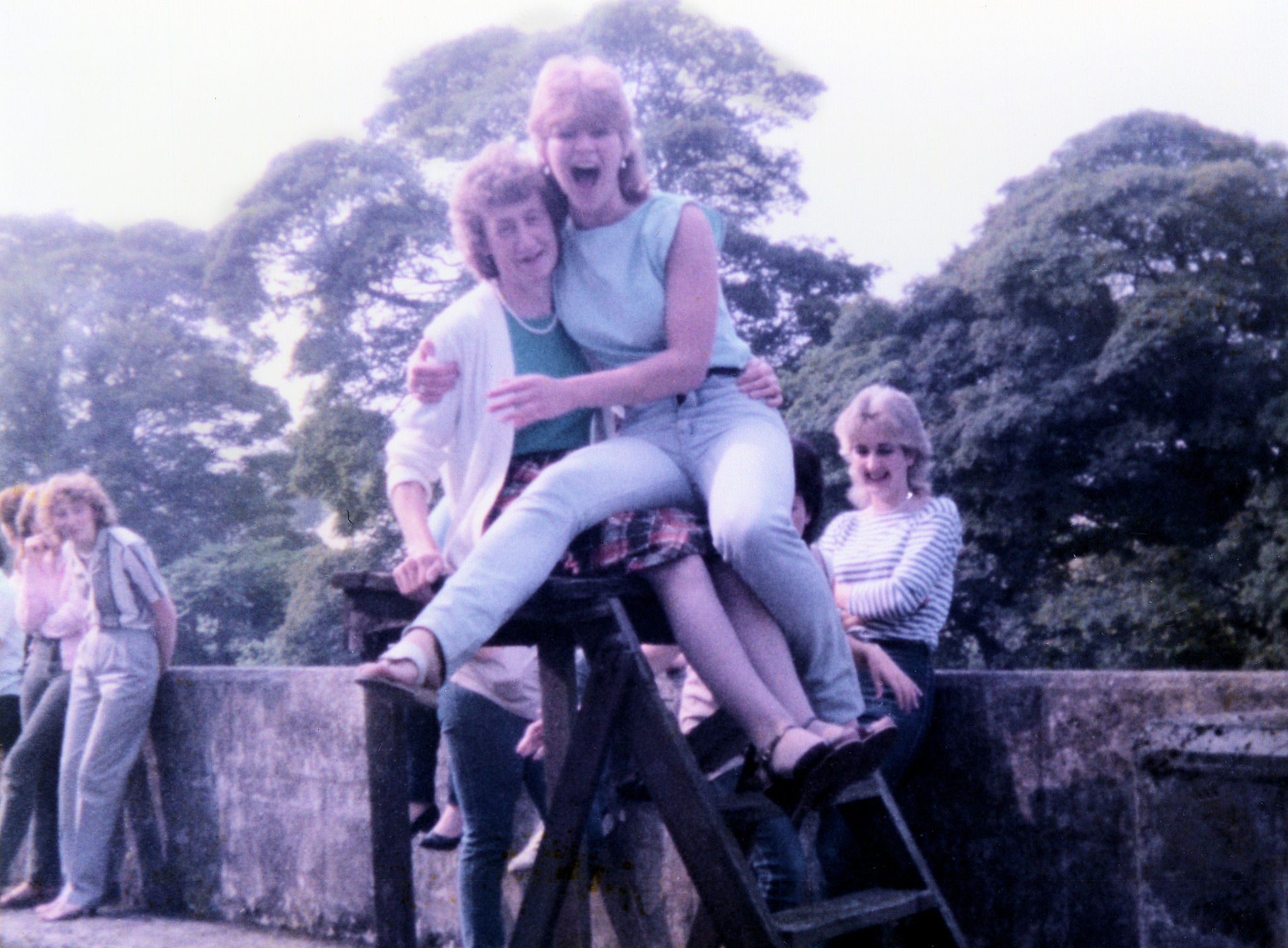
These photographs record something the company paperwork cannot: the people who were still working, sharing their lunch breaks and enjoying one another’s company while the Stitching Room remained open.
Open photographTogether in the Stitching RoomKathleen is third from the left in the back row.Open photographA laugh on the lunch breakKathleen and her colleagues outside the works.
Both photographs are reproduced from clean originals with permission from Down Memory Lane and Len Kinley.
A living record
The visitors’ book
Add your name to the record of people who came here to remember the Old Bleach and those who worked there.
This is a visitors’ book, separate from the workers’ family records. Leave a memory, a connection or a few words of appreciation.
Died peacefully at home · 12 October 2023 · in her nineties
Kathleen lived a long life and will be remembered by her family and relatives for far more than this workplace and these three photographs. Here, they preserve one part of her story: a skilled woman at her machine, surrounded by the people with whom she worked and laughed.
This page begins with Kathleen, but it belongs to every woman and man whose labour, knowledge and friendships made the Old Bleach part of Randalstown.
For Kathleen, for her colleagues, and for all the workers of the Old Bleach.
The three 1982 photographs are reproduced with permission from Down Memory Lane and Len Kinley. The two additional factory photographs are shown as supplied with their Down Memory Lane watermark. The 1935 sales bill and boxed luncheon set are surviving objects supplied for this archive. The exact article Kathleen was stitching is not recorded. Dates and descriptions are kept separate from family interpretation.